
A New Era of Life on Board
Life on board has evolved. A modern vessel is no longer just a means of navigation; it is a floating home and office. High-definition streaming, video conferencing, and advanced navigation systems now demand clean, constant, and, above all, reliable power.
Bespoke Energy Assessment & Electrical Design
The first step toward self-sufficiency is a thorough energy audit. This detailed analysis allows us to accurately scale a system tailored to your actual needs. To achieve this, we calculate your daily consumption in Amp-hours (Ah) by analyzing all on-board equipment, including:
Navigation equipment
Chartplotters, radar, and VHF.
Autopilot
Power steering systems
Lighting
Cabin and navigation lights, preferably LED.
Comfort systems
Refrigerator, freezer, and audio.
Essential Services
Fresh water pumps and chargers.
For a 40-foot cruising yacht, this daily consumption can be around 100-120 Amp-hours (Ah), a figure that a traditional battery bank could barely cover for a single day.
Renewable generation: sun and wind at your service
We harness the most abundant energy sources at sea to create a constant and sustainable charging flow.
Solar Power
We install high-efficiency monocrystalline panels on structures such as the bimini, optimizing available space and minimizing shading for maximum energy harvest during daylight hours.
Wind Power
We integrate stern-mounted wind turbines that complement solar charging. They are especially valuable at night or on cloudy days, ensuring continuous power generation.
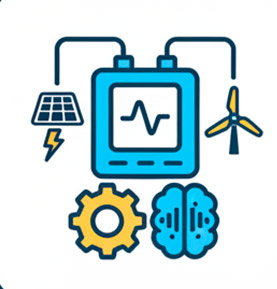
Controllers
The key to maximizing energy harvest lies in MPPT (Maximum Power Point Tracking) charge controllers. These devices utilize advanced fuzzy control algorithms specifically designed for the marine environment.
The Transition to Lithium (LiFePO4)
Switching to Lithium (LiFePO4) batteries is one of the smartest investments for modern sailing. Their technical superiority over traditional Lead-Acid batteries is overwhelming and translates directly into greater autonomy, reliability, and comfort.
Feature
Usable Capacity (DoD)
Life Cycles
Charging Speed
Maintenance
Lead-Acid Batteries
~50%
300-500 cycles
Slow
Required (levels, etc.)
Lithium Batteries (LiFePO4)
80-100%
3,000 - 5,000 cycles
Up to 5 times faster
Zero / Maintenance-free
Feature
Feature
Feature
Feature
Feature
Feature
A 200Ah LiFePO4 battery offers almost double the usable energy of a lead-acid battery of the same nominal capacity. This means more autonomy with less weight and volume.
Crucially, every high-quality lithium battery integrates a Battery Management System (BMS). This component is critical for safety, as it actively protects the cells against overcharging, deep discharge, and short circuits, ensuring safe operation and a long service life in the demanding marine environment.
With a generation and storage system of this calibre, the next step is to provide it with a brain to manage everything efficiently and safely.
- Smart Boat - Centralized Control and Monitoring
Having high-quality components is only part of the equation. The real leap in quality occurs when an intelligent "brain" orchestrates the entire energy system. This centralized management ensures maximum efficiency, extends equipment life, and provides total peace of mind, knowing your boat is performing optimally.
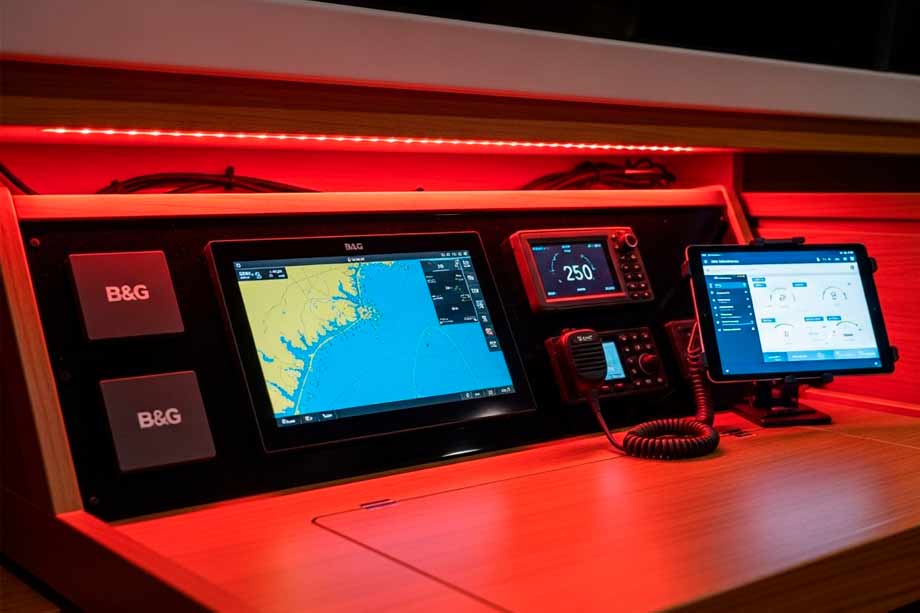
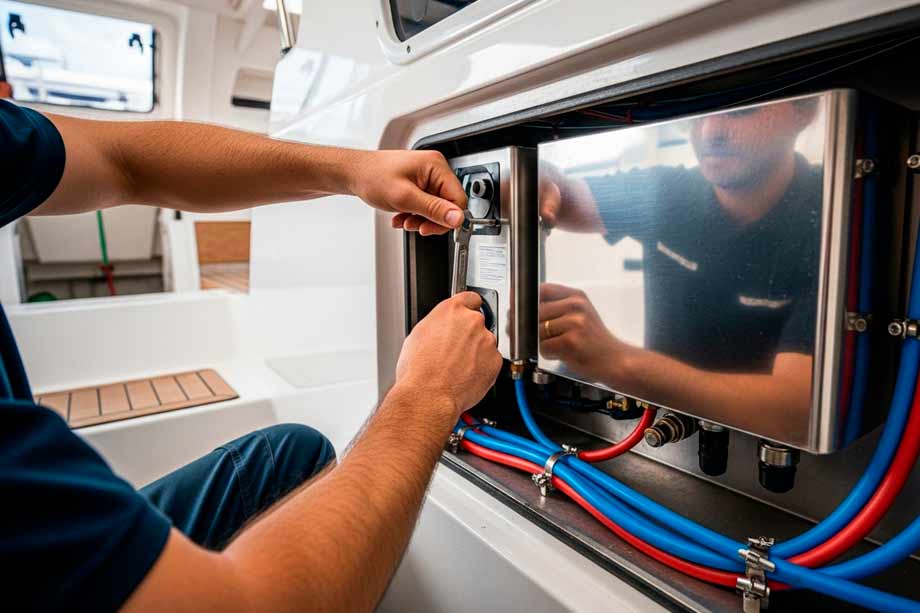
The Energy Management System (EMS) is the control hub of your boat. Its function is to intelligently coordinate all energy sources (solar, wind) and consumption.
It prioritizes supply to essential loads (navigation, refrigeration). It stores surplus energy directly in the battery bank. It safeguards autonomy by disconnecting non-essential loads if the battery's state of charge (SoC) drops below a predefined safety threshold (e.g., 30%).
Smart systems grant you unprecedented control over your boat's energy status. Through a control and monitoring interface (HMI), you can visualize the complete energy flow in real-time: from solar panel harvesting and passage through DC/DC converters to battery charging and equipment consumption. This total visibility allows you to make informed decisions and maintain absolute control over available autonomy at all times.
The reliability of these advanced systems, however, depends directly on the quality and rigour of their technical installation.
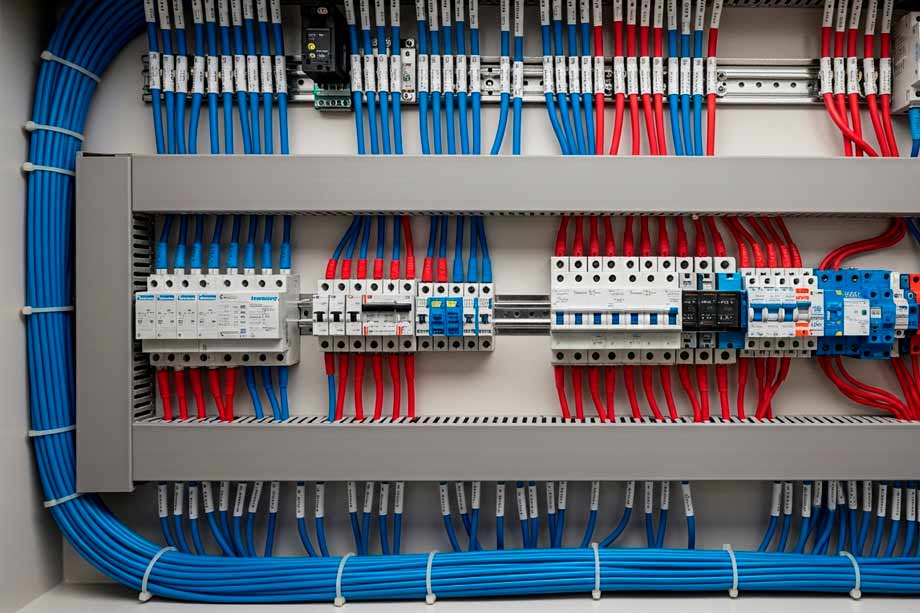
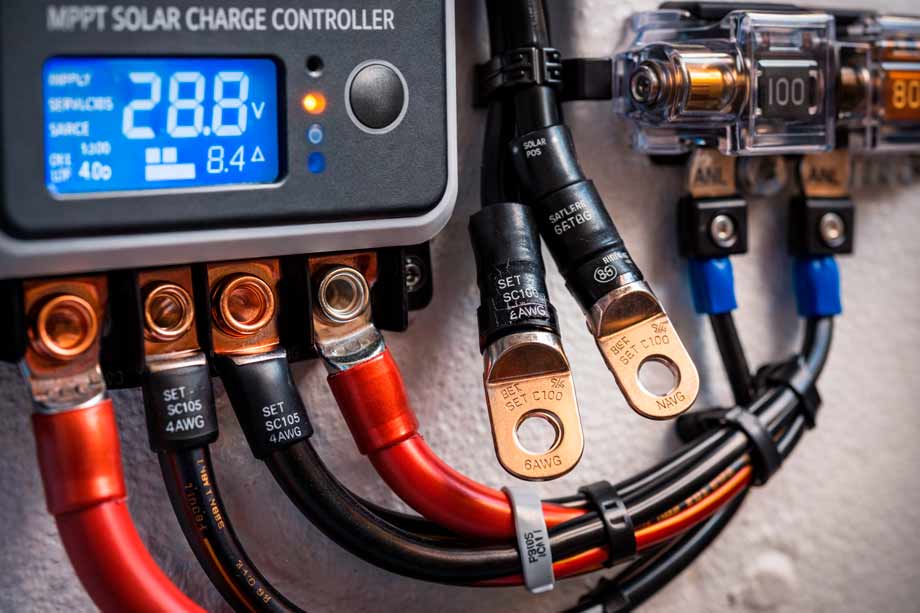
Technical Rigour and Marine-Grade Safety
In an environment as hostile as the sea, the quality of installation and components is non-negotiable. Technical rigour is what differentiates a reliable system that provides long-term peace of mind from one that can cause critical failures at the worst possible moment. Therefore, every installation is governed by the highest standards of safety and durability.

Marine-Grade Components
All subsystems, from the panels to the last connector, are specified as marine-grade. This guarantees resistance to the most severe environmental stressors, such as salt spray, constant engine and hull vibrations, and UV degradation, as specified in marine qualification standards.
Charging System Compatibility
It is crucial to verify that all charging sources—the engine alternator, shore charger, and solar controllers—have specific charging profiles compatible with LiFePO4 battery chemistry. Using incorrect profiles can irreversibly damage the batteries and drastically reduce their service life.
Advanced Electrical Safety
Crew safety is the top priority. Therefore, we implement key components such as galvanic isolation converters, an essential element to ensure electrical safety in the boat's living areas and prevent any risk of stray current or discharge through the hull.
This attention to technical detail is what guarantees a safe, durable, and truly autonomous system, ready for you to take the next step toward total energy independence.